What is creatine, exactly?
Creatine is a naturally occurring compound made from three amino acids: arginine, glycine, and methionine. Your body produces it — primarily in the liver and kidneys — and stores it mostly in skeletal muscle (around 95%), with smaller amounts in the brain and heart.
You also get creatine through food. Red meat and fish are the richest dietary sources. But here is the catch: you would need to eat around 500–1,000 grams of raw beef daily to match what a standard creatine supplement provides. For most people — and especially for vegetarians and vegans, who have measurably lower baseline creatine stores — supplementation is the most practical option.
Creatine has been used in sports science since the early 1990s. It gained public attention around the 1992 Barcelona Olympics, when several medalists reportedly used it. Since then, it has accumulated one of the most robust evidence bases of any supplement ever studied.
Creatine is not a steroid or stimulant. It is a natural compound your body already makes and uses. Supplementation simply increases the amount stored in your muscles and brain — allowing your body to do more with what it already knows how to do.
How does it actually work?
To understand creatine, you need to understand ATP. Adenosine triphosphate (ATP) is the primary energy currency of every cell in your body. When you lift, sprint, or perform any explosive movement, your muscles burn ATP extremely fast — so fast that they can only sustain maximum output for around 8–10 seconds before ATP runs out.
This is where creatine comes in. Creatine is stored in muscle as phosphocreatine, which rapidly donates a phosphate group to rebuild ATP from ADP. The result: your muscles can maintain high-intensity output for slightly longer before switching to slower energy systems. That extra capacity adds up — more reps, more power per session, more adaptation over time.
What this means in practice
The effects of creatine are most pronounced in activities lasting 1–30 seconds: explosive lifts, sprints, high-intensity interval sets. For endurance sports (long-distance running, cycling at steady state), the direct benefit is smaller — though indirect benefits through faster recovery and harder training sessions still apply.
People who eat little or no meat have lower baseline creatine stores in their muscles. When they supplement, they start from a lower baseline — meaning the relative increase is larger and the performance benefit is often more noticeable than in meat-eaters.
Water and muscle volume
Creatine pulls water into muscle cells — a process called cell volumization. This is why some people notice a weight increase of 1–2 kg in the first 1–2 weeks of supplementation. This is not fat. It is intracellular water, which is associated with improved muscle protein synthesis signals. The scale goes up, but you are leaner in relative terms.
Benefits beyond muscle
For years, creatine was discussed almost exclusively in the context of strength and power sports. That view has changed substantially. Research published between 2018 and 2024 has opened up a much broader picture — particularly around brain health, aging, and mental performance.
Brain health and cognitive function
The brain uses a significant amount of ATP — especially under mental stress, sleep deprivation, or demanding cognitive tasks. Creatine is stored in brain tissue and supports cerebral energy metabolism in the same way it does in muscle. A 2021 narrative review in Nutrients concluded that creatine supplementation shows promise for improving brain creatine levels and cognitive performance, particularly in situations of metabolic stress.
A 2023 review published in Sports Medicine (Candow et al.) found that creatine may support brain health across the lifespan — with effects seen in tasks involving memory, processing speed, and mental fatigue. This is an emerging field, and larger trials are underway, but the mechanism is well established.
Sleep deprivation resilience
One of the more surprising findings from recent research: creatine appears to partially offset the cognitive decline caused by sleep deprivation. A study by Cook et al. showed that creatine supplementation helped maintain cognitive performance in sleep-deprived subjects — more so than caffeine alone for certain tasks. For people with irregular schedules, shift workers, or new parents, this is a clinically meaningful finding.
Older adults: muscle preservation
After age 30, adults lose roughly 3–8% of muscle mass per decade — a process called sarcopenia that accelerates after 60. Multiple meta-analyses show that creatine combined with resistance training significantly improves lean mass, strength, and functional capacity in older adults beyond what training alone achieves. A 2021 analysis in Nutrients (Forbes et al.) covering 22 randomised trials found consistent benefits for older adults across a range of outcomes including muscle mass, leg press strength, and upper body strength.
Women and creatine
Research specifically on women and creatine has expanded significantly since 2020. A 2021 paper in Nutrients (Smith-Ryan et al.) reviewed evidence across the female lifespan — from athletic performance to menstrual cycle effects, pregnancy, and menopause. Women typically have 70–80% lower creatine stores than men and may respond differently across hormonal phases. The paper concluded that supplementation is not only safe but particularly relevant for women in perimenopause and beyond, where muscle and bone loss accelerate.
Creatine is no longer just a gym supplement. The research increasingly positions it as a foundational support compound for energy metabolism across multiple systems — muscle, brain, and aging tissue alike. The evidence base is still growing, but the direction is consistent.
Which form of creatine actually works?
The supplement market has introduced dozens of creatine forms over the years, each marketed as superior to the last. The science tells a different story. Here is an honest breakdown.
The most studied form in the world. Nearly every study showing a benefit for creatine used monohydrate. Cheap, effective, well tolerated. There is no compelling research showing any other form is meaningfully superior. Start here — and for most people, stay here.
Chemically identical to standard monohydrate, but the particles are smaller. This improves how it mixes in water and may slightly reduce the gritty texture some people notice. No difference in efficacy — just convenience.
Bonded to hydrochloric acid for improved solubility. Requires a smaller dose per gram (around 1–2g vs 3–5g), and is marketed as causing less water retention. Some evidence supports better solubility, but no study has shown it to be more effective than monohydrate for actual outcomes.
Creatine bonded to nitrate, which has its own vasodilatory effects. May enhance blood flow and muscle pump during training. Some early research is promising, but the evidence base is much thinner than monohydrate. Not a first choice.
Marketed as more stable and requiring no loading. A direct head-to-head trial published in the Journal of the International Society of Sports Nutrition (2012) found no difference in muscle creatine saturation, body composition, or performance vs. standard monohydrate. Premium price, no premium result.
Once popular, CEE was studied head-to-head against monohydrate and found inferior. It converts to creatinine (a waste product) in the stomach at a high rate, meaning far less usable creatine reaches muscle tissue. Multiple studies confirm monohydrate outperforms CEE on every relevant measure.
Buy creatine monohydrate — ideally micronized for easier mixing. Do not pay more for HCl, Kre-Alkalyn, or any "advanced" form. The evidence does not support the premium. The cheapest monohydrate from a reputable brand will outperform most expensive alternatives based on the available research.
What the latest science says
The creatine research landscape has expanded significantly in recent years. Below are four key studies — covering muscle, brain, aging, and memory — including recent publications from 2021–2023.
A 2021 meta-analysis in Nutrients by Forbes et al. pooled data from 22 randomised controlled trials in adults over 50. Creatine supplementation combined with resistance training produced significantly greater improvements in lean mass, leg press strength, and upper body strength compared to training alone. The conclusion: creatine is one of the most effective nutritional strategies for combating age-related muscle loss.
Roschel et al. published a narrative review in Nutrients examining creatine's role in brain health, covering mechanisms, clinical evidence, and populations most likely to benefit. The brain has its own creatine stores, and supplementation can increase brain creatine levels — particularly relevant in vegetarians, aging populations, and following traumatic brain injury. Cognitive benefits under conditions of mental stress or sleep deprivation were highlighted as areas of growing evidence.
A 2023 systematic review and meta-analysis in Nutrition Reviews by Prokopidis et al. analysed data from 10 randomised controlled trials covering 281 participants. Creatine supplementation was associated with significant improvements in memory performance in healthy individuals — with particularly pronounced effects in older adults (66+) and in vegetarians. This is one of the most robust analyses to date on creatine and cognitive outcomes in non-clinical populations.
A 2021 review in Nutrients by Smith-Ryan et al. examined creatine research specifically in women — covering athletic performance, hormonal interactions, pregnancy, and menopause. Women have 70–80% lower intramuscular creatine stores than men at baseline, and tend to show strong responses to supplementation. The paper highlighted particular relevance for women in perimenopause and post-menopause, where declining oestrogen accelerates muscle and bone loss.
A major 2023 review in Sports Medicine by Candow et al. summarised the emerging evidence for creatine as a neuroprotective compound. It covered traumatic brain injury, neurodegenerative disease, depression, and age-related cognitive decline. The authors concluded that creatine holds significant promise for brain health applications, and called for more large-scale clinical trials to confirm findings already seen in smaller studies.
The evidence for creatine now extends well beyond the gym. Muscle performance, brain function, memory, and healthy aging are all areas with meaningful and growing evidence. The foundational research on muscle is among the most replicated in all of supplement science — and the cognitive research is catching up fast.
How and when to take creatine
Creatine dosing is more flexible than most guides suggest. There are two main approaches, and both work. The difference is in how quickly your muscles reach saturation.
| Protocol | Phase 1 | Phase 2 | Time to saturation |
|---|---|---|---|
| Loading | 20g/day split into 4x5g doses for 5–7 days | 3–5g/day maintenance | ~7 days |
| No loading | 3–5g/day from day one | Continue indefinitely | ~4–6 weeks |
Both protocols reach the same endpoint. Loading gets you there faster but may cause short-term GI discomfort in some people. No loading is gentler and equally effective long term.
Timing: does it matter?
Research on creatine timing is mixed, but a slight advantage for post-workout intake has been reported in some studies. The most important factor by far is consistency — taking it every day, regardless of whether you train. Creatine works through saturation, not through acute timing like caffeine. Taking it at the same time each day (with food, a shake, or alone) is the most practical approach.
Does it need to be cycled?
No. There is no evidence that creatine cycling improves outcomes or prevents tolerance. Long-term continuous supplementation (up to 5 years in some studies) has been shown to be safe. You do not need to stop and restart.
| Goal | Recommended form | Daily dose | Timing |
|---|---|---|---|
| Strength & muscle | Monohydrate | 3–5g | Post-workout or any consistent time |
| Brain & cognition | Monohydrate | 5g | Morning or with a meal |
| Older adults | Monohydrate | 5g | With a protein-containing meal |
| Vegetarians / vegans | Monohydrate | 5g | Daily — baseline stores are lower |
| Loading phase | Monohydrate | 4x5g | Spread across the day with meals |
Because creatine draws water into muscle cells, adequate hydration matters more than usual. Drink at least 2–3 litres of water per day while supplementing. Dehydration combined with high-intensity exercise and creatine loading may increase cramp risk in some individuals.
What most people get wrong
Creatine is one of the simplest supplements to use correctly — yet the same mistakes appear repeatedly. These are the ones that most often prevent people from getting results.
Mistake 1: Buying an expensive "advanced" form. There is no published study showing Kre-Alkalyn, creatine HCl, or any buffered form outperforms basic creatine monohydrate for strength, muscle, or cognitive outcomes. You are paying extra for marketing, not for results.
Mistake 2: Taking it inconsistently. Creatine works by saturating your muscles over time. Missing days does not cause acute harm, but it slows the saturation process. Daily use — even on rest days — is what maintains the effect. Treat it like a daily commitment, not a pre-workout stimulant.
Mistake 3: Expecting to "feel" it. Creatine is not a stimulant. There is no immediate sensation, no energy rush, no instant feedback. The effect is structural — more phosphocreatine in muscle — and the outcome shows up in performance over weeks, not in how you feel on day one. People who stop early rarely gave it a real chance.
Mistake 4: Worrying about kidney damage. This concern is based on a misunderstanding. Creatine increases creatinine in urine — a metabolic byproduct that labs use to assess kidney function. This can make standard kidney markers look slightly elevated in people who supplement, which sometimes triggers unnecessary concern. In people with healthy kidneys, decades of research show no adverse renal effects from standard doses.
Mistake 5: Not drinking enough water. The volumisation effect of creatine means your muscles are holding more water. If you are not adequately hydrated, this can contribute to muscle cramping during intense exercise. This is not a reason to avoid creatine — it is a reason to drink more water.
Creatine is the closest thing to a sure bet in supplement science. Buy cheap monohydrate, take 3–5g daily, stay consistent, drink water. That is genuinely all there is to it. The complexity comes from the marketing industry, not from the research.
The short version
- Creatine is a natural compound your body already makes and stores in muscle and brain tissue. Supplementation increases those stores.
- It works by replenishing ATP faster during high-intensity effort — allowing more output before fatigue sets in.
- Recent research (2021–2023) shows significant benefits for brain health, memory, cognitive resilience under sleep deprivation, and healthy aging.
- Creatine monohydrate is the gold standard. No other form has been shown to outperform it in real outcomes. Micronized is the same thing with better solubility.
- Kre-Alkalyn and Creatine Ethyl Ester are not better — and CEE has been shown to be worse. Avoid premium forms without evidence.
- Standard dose: 3–5g daily. Loading (20g/day for 5–7 days) is optional — it speeds up saturation but produces the same endpoint.
- Consistency matters more than timing. Take it every day — including rest days. Drink plenty of water.
- Women, vegetarians, and adults over 50 tend to see the most pronounced benefits due to lower baseline creatine stores.
What we would actually use
We recommend based on ingredient quality, third-party testing, and value. For creatine, that almost always means plain micronized monohydrate from a trusted brand — nothing more is needed.
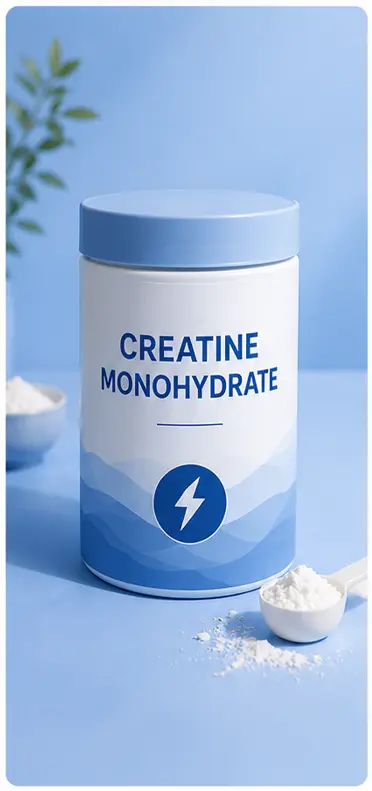
One of the most widely used creatine products in the world. Unflavored micronized monohydrate — mixes cleanly into water or a shake, no taste, no grit. Third-party tested, Informed Sport certified. 5g per serving. Nothing else added.
- ✓ Pure micronized monohydrate — the most studied form
- ✓ Informed Sport certified — tested for banned substances
- ✓ Mixes cleanly — no grit, no taste, no filler ingredients
- ✓ Excellent value — cost per gram is very low

Thorne is one of the most trusted names in evidence-based supplementation. Their creatine is NSF Certified for Sport — the most rigorous third-party certification available. Suitable for competitive athletes who are subject to drug testing. Slightly higher price for premium quality assurance.
- ✓ NSF Certified for Sport — highest available certification standard
- ✓ Used and trusted by professional athletes and clinical settings
- ✓ Pure monohydrate — no additives, no fillers
- ✓ Brand with a long track record in evidence-based supplementation
References
-
1Forbes S.C. et al. (2021). Meta-Analysis Examining the Importance of Creatine Ingestion Strategies on Lean Tissue Mass and Strength in Older Adults. Nutrients, 13(6), 1912. PubMed: 34199025
-
2Roschel H. et al. (2021). Creatine Supplementation and Brain Health. Nutrients, 13(2), 586. PubMed: 33578876
-
3Prokopidis K. et al. (2023). Effects of creatine supplementation on memory in healthy individuals: a systematic review and meta-analysis. Nutrition Reviews, 81(4), 416–427. PubMed: 36368816
-
4Smith-Ryan A.E. et al. (2021). Creatine Supplementation in Women's Health: A Lifespan Perspective. Nutrients, 13(3), 877. PubMed: 33806481
-
5Candow D.G. et al. (2023). Heads Up for Creatine Supplementation and its Potential Applications for Brain Health and Function. Sports Medicine, 53(Suppl 1), 49–65. PubMed: 37368234
-
6Buford T.W. et al. (2007). International Society of Sports Nutrition position stand: creatine supplementation and exercise. Journal of the International Society of Sports Nutrition, 4, 6. PubMed: 17908288
-
7Jagim A.R. et al. (2012). A buffered form of creatine does not promote greater changes in muscle creatine content, body composition, or training adaptations than creatine monohydrate. Journal of the International Society of Sports Nutrition, 9(1), 43. PubMed: 22971354 (Kre-Alkalyn vs. monohydrate)
-
8Avgerinos K.I. et al. (2018). Effects of creatine supplementation on cognitive function of healthy individuals. Experimental Gerontology, 108, 166–173. PubMed: 29704637